How Much Are Credit Card Points Worth in Canada? Cents per Point by Program
A point is only worth what you redeem it for. Here is how Canadian programs price their points, where the fixed values sit, and a simple formula for checking any redemption.
By Andrew Updated How we review cards

A credit card point has no single value. It is worth whatever you can buy with it, divided by the number of points you spend. Some Canadian programs fix that number for you (100 Scene+ points take $1 off travel, for example). Others, like Aeroplan, let the value float with the price of the flight. Once you know which kind of currency you hold, you can compare a “5 points per dollar” card with a “2% cash back” card honestly.
This guide explains how value is calculated, then walks through the major Canadian programs one at a time. Every ratio below links to the program’s own page. Programs change their rules, so treat the links as the source of truth.
The one formula you need
Cents per point (often written “cpp”) is:
(Cash price you avoided − cash you still paid) ÷ points redeemed × 100
Say a return flight costs $520 in cash. Booked with points, it costs 30,000 points plus $120 in taxes and fees. You avoided $520 but still paid $120, so the points covered $400. Divide $400 by 30,000 points and multiply by 100: about 1.33 cents per point.
Three habits keep this honest:
- Use the price you would actually pay. If you would have taken the $380 flight with a connection, that is the cash price, not the $520 nonstop.
- Subtract what you still pay. Taxes, fees and partner surcharges reduce the value of the points.
- Remember the points you did not earn. A ticket bought with cash earns points on your card and sometimes in the airline program too. A reward ticket often does not.
Fixed-value versus variable-value points
Canadian rewards currencies fall into two groups.
Fixed-value points have a published redemption rate. Scene+, BMO Rewards, TD Rewards through Expedia for TD, PC Optimum and the “use points for purchases” options at Amex and RBC all work this way. You cannot do much better than the published rate, but you also cannot do much worse. They behave like cash back with extra steps.
Variable-value points are priced in points per flight or per hotel night, and the cash price of that flight changes. Aeroplan is the main example. Flexible currencies such as Amex Membership Rewards and RBC Avion sit in both groups: they have a fixed floor, and you can sometimes do better by transferring to an airline program or using a fixed-points flight chart.
Program by program
| Program | Published floor (at time of writing) | Where more value can come from |
|---|---|---|
| Amex Membership Rewards | 1,000 points = $10 statement credit on eligible purchases | Fixed Points Travel; transfers to Aeroplan and other partners |
| RBC Avion | 100 points = $1 on travel through Avion Rewards | Air Travel Redemption Schedule; conversions to airline programs |
| CIBC Aventura | Travel through the CIBC Rewards Centre | Aventura Airline Rewards Chart (maximum base fare per region) |
| Scene+ | 100 points = $1 on travel; 1,000 points = $10 at grocery partners | None really; value is flat |
| TD Rewards | 200 points = $1 on Expedia for TD | Booking through the portal rather than elsewhere |
| BMO Rewards | 150 points = $1 on travel paid with your BMO card | None really; value is flat |
| Aeroplan | No fixed value; flight prices are dynamic | Flights where the cash fare is high relative to the points price |
| PC Optimum | 10,000 points = $10 | Bonus offers that multiply points earned |
American Express Membership Rewards
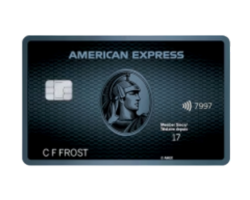
On cards like the American Express Cobalt Card, Amex lets you redeem 1,000 points for a $10 statement credit against eligible purchases, which sets a floor of 1 cent per point. The Membership Rewards page also describes the Fixed Points Travel Program, where a set number of points covers the base fare of a flight up to a maximum base ticket price. Taxes and carrier surcharges are extra. If the base fare is close to the maximum for its band, you get more than 1 cent a point. If the fare is cheap, the unused part of the maximum is simply lost.
Membership Rewards points can also be transferred to partners such as Aeroplan. Amex lists the current partners and ratios on its travel partners page. For how this plays out between Cobalt and Gold, see our Cobalt vs Gold Rewards guide.
RBC Avion
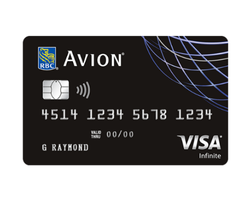
Avion Rewards sets a premium redemption rate of 100 points = $1 CAD on travel booked through the Avion portal (minimum 1,000 points). Avion cardholders such as RBC Avion Visa Infinite holders also get the Air Travel Redemption Schedule: fixed points by destination, with a maximum ticket price per band. As with Amex’s chart, the value per point depends on how close the base fare is to that maximum. RBC also lets you convert Avion points to programs including WestJet Rewards, British Airways Executive Club, American Airlines AAdvantage and Cathay Pacific, according to its card page.
CIBC Aventura
CIBC publishes an Aventura Airline Rewards Chart for round-trip economy flights booked through the CIBC Rewards Centre. Each region has a points range and a maximum base fare. For example, short-haul flights within Canada and the U.S. are listed at 10,000 to 20,000 points with a $400 maximum ticket price. Taxes and other charges are paid separately, in cash or points. Again, the closer the fare is to the cap, the better each point does.
Scene+
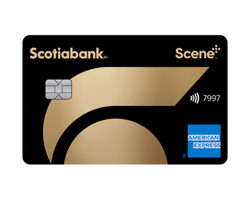
Scene+ is about as simple as Canadian points get. Scotiabank’s Scene+ calculator page states that 100 points give $1 in value. That applies to Scene+ Travel bookings and to travel booked anywhere with a Scene+ Scotiabank card using Apply Points to Travel, which works within 12 months of the purchase. Grocery partners redeem in 1,000-point blocks for $10. So Scene+ points are worth about 1 cent almost everywhere. Our Scene+ explainer covers the details.
TD Rewards
Expedia for TD values TD Rewards at 200 points = $1, or 0.5 cents per point, with redemptions in 200-point increments. Other TD Rewards options, such as statement credits or travel booked elsewhere, use more points per dollar. A card that earns “8 points per dollar” on portal travel is therefore earning about 4% in travel value, not 8%. That is why points-per-dollar headlines should always be converted before you compare cards.
BMO Rewards
BMO Rewards points redeem at 150 points = $1 on eligible travel you book with your BMO Rewards card, using Pay with Points within 90 days of the purchase (BMO Rewards terms and bmorewards.com). That is about 0.67 cents per point, so “5 points per dollar” works out to roughly 3.3% back on travel value.
Aeroplan
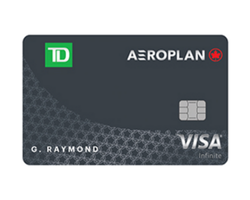
Aeroplan has no fixed value. Air Canada flights use dynamic pricing, and the Flight Reward Chart shows “starting at” prices by distance band, with actual prices moving with demand. TD’s Aeroplan card page says that, based on cardholder flight redemptions it analysed, the majority of cardholders received a value of $0.02 per point or more on flights. Treat that as the issuer’s figure, not a guarantee for your trip. The formula above will tell you what a specific booking is worth. Start with our Aeroplan for beginners guide.
PC Optimum
PC Optimum uses big numbers: 10,000 points = $10, so each point is worth 0.1 cents. A card that earns “30 points per dollar” at participating grocery stores is returning 3%. See the PC Optimum explainer.
Turning value into a return rate
Once you know cents per point, multiply by the earn rate to get a real return:
Earn rate × cents per point = percentage back
- 5 points per dollar × 1 cent = 5% (an Amex Membership Rewards category redeemed at the floor)
- 3 points per dollar × 0.67 cents = about 2% (BMO Rewards on travel)
- 1.5 points per dollar × 1 cent = 1.5% (Aventura or Avion at the portal rate)
- 30 points per dollar × 0.1 cents = 3% (PC Optimum at a participating grocer)
Now you can compare points cards against the best cash back cards on the same footing. If a points card only beats a cash back card when you assume 2 cents per point, ask yourself whether you will actually book the trips that produce 2 cents.
Common ways people overvalue points
- Using the best-case value for every point. One great business-class booking does not mean every point you earn is worth that much.
- Forgetting fees and surcharges. A reward ticket with high taxes and fees can be worth far less than its headline.
- Ignoring caps and category rules. Elevated earn rates often have monthly or annual caps and depend on how the merchant is coded.
- Counting points you will never redeem. Points sitting in an account for years are worth nothing until you use them, and some programs close inactive accounts.
- Choosing a currency that does not match your life. Flexible travel points are wasted on someone who wants grocery money.
FAQ
What is a good value for a credit card point in Canada? It depends on the program. For fixed-value currencies like Scene+ or Amex’s statement credit option, the published rate (about 1 cent) is the value. For Aeroplan and other airline points, value varies by booking, so calculate it with the formula above and compare against what you would earn from a simple cash back card.
Is 1 cent per point good? For flexible points it is a reasonable floor, because it is what you get just by applying points to travel or purchases. Whether a card that earns those points is good depends on its earn rates, fee and caps.
Are points better than cash back? Only if you redeem them at a rate that beats the cash back you gave up, after accounting for the annual fee. Many Canadians are better served by cash back. Our cash back guide explains the trade-off.
Do Canadian credit card points expire? It varies. Avion points do not expire according to RBC, Aeroplan points expire after 18 months of inactivity unless you hold an eligible Aeroplan credit card, and Scene+ closes accounts after long inactivity. Check your program’s terms.
What to do next
Look up which currency your current card earns, convert its earn rates to a percentage using the table above, and compare it with a no-fee cash back card. If you are shopping for a new card, browse the rewards hub or the travel hub, then read our guide on how to choose a travel card.