Best Cash Back Credit Cards for Everyday Spending
Pay in full, then pick category cash back if two bills dominate, or a flat rate if spend is scattered. Points only win if you will redeem them like cash.
By Andrew Updated How we review cards
For everyday Canadian spending, cash back is the default if you will not learn an award chart. Pick a category card if groceries, gas, or recurring bills are large and predictable. Pick a flat or catch-all card if Amazon, big-box, and random retail dominate. A points card from the rewards hub only beats cash back when you redeem those points at a value you can live with — not at the marketing “up to.”
Pay the statement in full. A 4% grocery rate is a rounding error next to 20%+ interest.
The live inventory sits on the cash-back hub. Fees and bonus categories change; confirm them on each card page.
Cash back versus rewards points
Cash back in Canada is usually a statement credit. You do not need a portal. You also cannot stretch a point to 2 cents on a lucky Aeroplan redemption.
Rewards cards (Avion, Aeroplan, Scene+, Membership Rewards, Optimum) can beat 2% cash back if you redeem well. They lose if you dump points for merchandise or a poor statement-credit rate. If you are not sure you will redeem well, take cash back and stop optimizing.
| Everyday pattern | Better shape | Examples to compare |
|---|---|---|
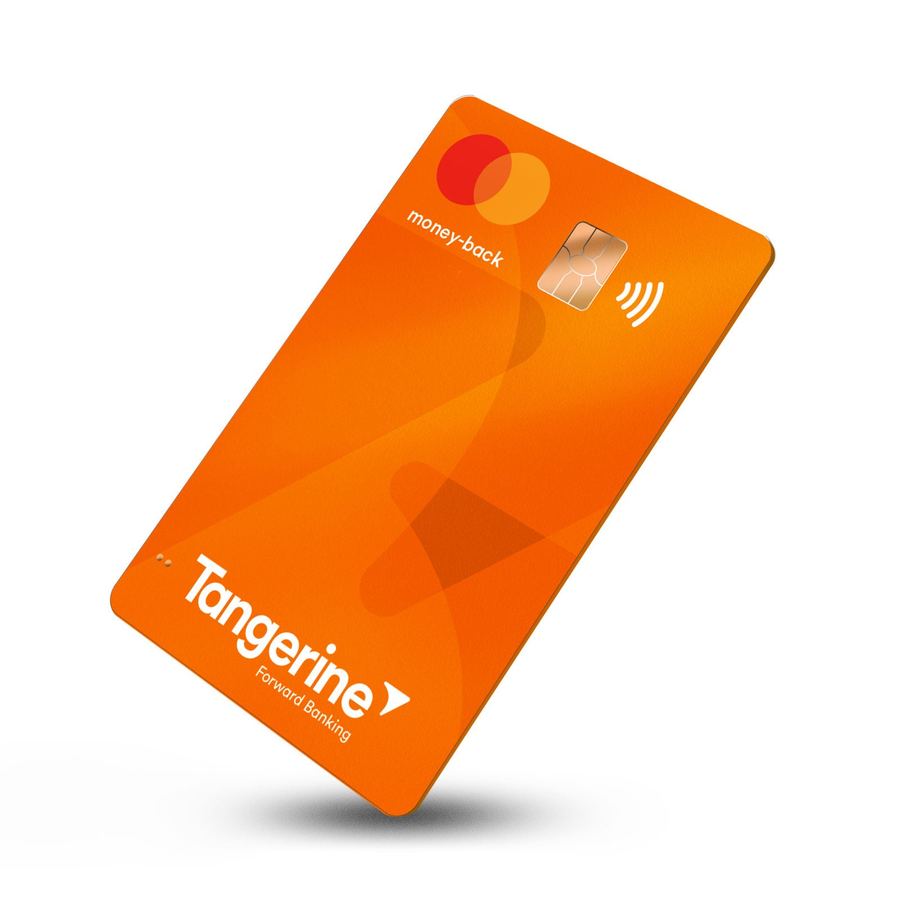
| Two categories you control | $0 pick-your-category | Tangerine Money-Back |
| Heavy grocery + autopay bills, Infinite income | Paid 4%-class Visa Infinite | Scotia Momentum Visa Infinite, CIBC Dividend Visa Infinite |
| Already on Amex, want cash not MR | Paid Amex cash back | SimplyCash Preferred |
| Scattered spend, no homework | Flat or simple $0 Visa | Simplii Cash Back Visa |
| Rogers-brand bills | Bill-credit Mastercard | Rogers Red or a paid Red tier |
| You will redeem travel points carefully | Skip cash back | See travel and rewards |
Warehouse clubs complicate grocery cash back. Costco Canada is Mastercard-only. A Visa Infinite grocery card does not check out there. CIBC Costco Mastercard is the club-specific product if that membership is real.
No-fee cash back: start here unless the fee is obviously covered
Tangerine Money-Back remains the reference $0 card: 2% on categories you choose, 0.5% on the rest, optional third category if you park cash back in a Tangerine savings account. It is a Mastercard, which helps at Costco and at merchants that skip Amex.
Simplii Financial Cash Back Visa is the “do not make me pick categories” alternative. Compare the live Simplii rate with Tangerine’s blended rate on your statements. Scattered spend favours Simplii; concentrated spend favours Tangerine.
SimplyCash from American Express is $0 on Amex: 2% at stand-alone gas and grocery up to $15,000 a year, then 1.25% on other purchases. That is a lower base rate than Preferred’s 2% catch-all. Use it as a companion, not as your only card.
Scotia Momentum No-Fee and TD Cash Back Visa are bank-ecosystem $0 options if you already live in those apps. They rarely beat Tangerine’s 2% categories, but they can beat Tangerine’s 0.5% if their grocery-and-bills mix matches you.
Read the no-annual-fee guide if the fee question is still open.
Paid cash back: only after you do year-two math
Paid grocery Visas exist because 3–4% on a large supermarket bill can exceed a $120-class fee. The test is year two, after any first-year waiver or 10% welcome window ends.
Scotia Momentum Visa Infinite currently describes 4% on groceries and recurring payments in our review, plus a first-year fee waiver on the special offer and a 15% welcome (15% cash back on the first $2,000 in purchases in the first 3 months, for accounts opened July 2 to November 1, 2026). Scotiabank’s two-year personal-card exclusion is strict. If you held a Scotia card recently, you may be paying a fee for 4% with no welcome cushion.
CIBC Dividend Visa Infinite pays 4% on grocery, gas, and EV charging and 2% on transit, dining, recurring payments, and CIBC by Expedia travel, then 1%. The 4% and 2% rates (except 2% on CIBC by Expedia) apply to the first $50,000 in annual card purchases or $20,000 in annual purchases in the bonus categories, whichever comes first. The current welcome is up to $350 for new cards approved beginning July 16, 2026: 10% cash back up to $200 on the first $2,000 over four statements, $50 for one pre-authorized payment, and a $120 first-year annual-fee rebate. Additional cards are $50 each, up to 3, rebated in year one. Do not assume 4% is always 4% — the cap, merchant definitions, and “recurring” rules all cut it.
SimplyCash Preferred pays cash on Amex: capped 4% grocery/gas in the current features and 2% on everything else, for a monthly fee. It wins if you already spend on Amex and the 2% catch-all is real. It loses at Costco and at grocers that decline Amex.
BMO CashBack World Elite is the high grocery-rate Mastercard comparison when you meet World Elite income. Confirm the live grocery percentage and any caps on that card page. The student and regular BMO CashBack cards pay less.
If grocery is the only large category, also read best grocery cards. Some “cash back” is actually Optimum or Scene+.
Caps, codes, and other ways 4% becomes 1%
Canadian cash-back cards love footnotes.
- Category caps. A 4% grocery rate that stops after a few thousand dollars a year is a 4% card until June and a 1% card after. Check the live page.
- Merchant codes. A Superstore, a Walmart Supercentre, a Costco food court, or a grocer that processes as a mass merchant can miss “grocery.”
- Recurring payments. Momentum-style bill bonuses often need a pre-authorized charge that codes correctly. Paying a landlord by e-transfer is not a recurring Visa payment.
- Annual payout. Some Amex cash back applies once a year. If you cancel in month 10, you can leave money on the table. Read the timing.
- Welcome exclusions. Bank employees, product-changers, and recent cardholders get cut from the offer and still pay the fee.
If you cannot explain the cap in one sentence, you will not track it.
When a rewards card is still the better “cash back”
Scene+ redeemed at Sobeys or Cineplex can feel like cash if that is where you already spend. PC Optimum knocked off a Superstore bill is cash-like. Avion redeemed as a statement credit is often worse than 1% cash back — you paid an annual fee for a discount portal.
Use the rewards hub when you want points. Use this guide when you want the statement to go down in dollars.
A hybrid that works: Tangerine or Dividend for grocery cash, and a small Scene+ or Aeroplan card only if you already collect that program. Two paid cash-back Infinites is usually one too many.
Interest, minimums, and the honesty test
Cash-back cards carry ordinary purchase rates. They are not low-interest products. If you revolve even one month in three, switch the conversation to the low-interest guide.
Minimum spend on welcome offers should be purchases you were making anyway. Manufactured spend is how people end up with a larger balance and a smaller bonus.
What to do next
Compare current fees and categories on the cash-back hub. If you would rather collect points, use the rewards hub. For a one-card cash wallet, see the set-and-forget stack. For a short personalized list, open the finder.
Verify every rate with the issuer. This is not financial advice. Approval is never guaranteed.