Low-Interest Credit Cards in Canada: When They Beat Rewards Cards
If you will carry a balance, a low-rate card beats 4% cash back. If you pay in full, skip low-interest products and take rewards or $0 cash back.
By Andrew Updated How we review cards

A low-interest credit card beats a rewards card in Canada when you will carry a purchase balance (or a transfer) long enough that interest would exceed the rewards you gave up. If you pay in full every month, a low-rate Visa does nothing for you — take cash back or a $0 card instead. If you already have a balance on a 20%-class card, compare purchase-rate cards (new spend) with balance-transfer cards (moving an existing debt). They are not the same product.
The live list is on the low-interest hub. Rates are a snapshot. Assigned rates can depend on your file. Confirm the number on the application.
This is general information, not a debt plan. If interest is unmanageable, talk to a not-for-profit credit counsellor. A new card is not a strategy by itself.
The break-even that rewards marketing skips
Suppose you revolve $3,000 for a year.
- At 19.99%, interest is in the neighbourhood of $600 if the balance stays flat (actual interest depends on payment timing).
- At 12.99%, the same rough picture is closer to $390.
- A 2% cash-back card on $3,000 of new spend would pay about $60 — and still charge ~20% on whatever you revolve.
Rewards do not survive revolving. That is the whole guide.
| Situation | Better tool | Why |
|---|---|---|
| Pay in full always | Rewards or $0 cash back | The low rate never fires |
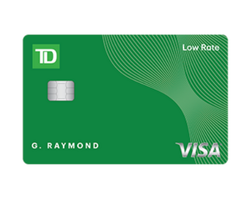
| New large spend you will pay down in months | Purchase teaser (e.g. TD Low Rate 0% purchase window in our review) | The debt is not already on another card |
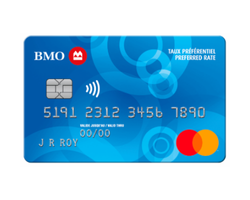
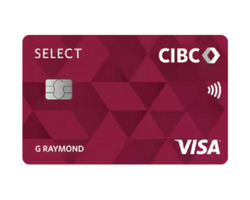
| Balance already sitting on another issuer | Transfer teaser (BMO Preferred Rate is 0% for 18 months with a 3% fee; CIBC Select is a separate Visa teaser) | You are moving principal; the BMO fee is 3% |
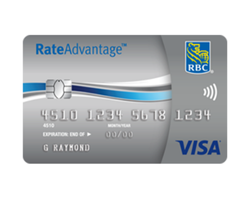
| Ongoing revolving, strong file, $0 fee | RBC RateAdvantage (Prime + formula in our review) | No membership fee; confirm the assigned rate |
| Costco is the revolving bill | A low-rate Mastercard | Costco Canada declines Visa |
| You “might” revolve once | Rewards + pay in full | Do not buy a worse earn rate for a maybe |
Never take a cash advance to “use” a low cash-advance rate. Fees and different interest clocks still make that a last resort.
Purchase teasers versus transfer teasers
TD Low Rate Visa in our review is a cheap ongoing purchase-rate Visa (12.90%-class, matching cash-advance in that snapshot) with a $25-class annual fee and a welcome line that puts 0% on purchases for the first six months from account opening — not on a balance transfer. Rewards are effectively N/A. Extra cards at $0. It is the right shape if the problem is a coming renovation bill or a vet invoice you will put on this card and pay down before the teaser ends.
BMO Preferred Rate Mastercard is the Mastercard version of that tool. For applications on or after September 15, 2026, new accounts get 0% on balance transfers for 18 months. The transfer fee is 3% (for example, $30 per $1,000; minimum transfer $100). Purchases are 13.99%. The $29 annual fee is waived in year one and rebated every year with a BMO Performance chequing account. When the 18 months end, any remaining transferred balance moves to the 15.99% cash advance rate. A 3% fee on a $5,000 transfer is $150 — still often cheaper than a year of 20% interest, and still not free. CIBC Select Visa is a separate transfer-shaped Visa if you do not need a Mastercard.
After any teaser, you are on the ongoing rate plus any annual fee. If the balance will still be there, you needed a payoff date, not another offer.
Variable prime-plus versus a printed rate
RBC RateAdvantage Visa is $0, with purchase and cash-advance both listed as Prime + 4.99%, and a note that the low variable rate is based on your credit rating. No welcome bonus is listed. It is not RBC Visa Classic Low Rate, which is the sibling that has carried a printed low rate and a transfer-style teaser in our reviews.
Prime moves. A prime-plus card is a floating bill. Confirm the assigned rate before you treat the marketing formula as a promise.
MBNA True Line and Home Trust Preferred Visa are other low-rate shapes if the big banks are not the right file. Read those pages; do not assume a 12% print.
What you give up
Low-interest cards usually have no real rewards program. A Starbucks Stars line or “RBC Offers” is not cash back. You are trading 1–4% earn for a lower rate.
You also often give up travel insurance that lives on Infinite cards. If you still travel while carrying a balance, buy insurance separately rather than keeping a 20% travel card “for the certificate.”
Annual fees on low-rate cards are usually small ($0–$40 class) compared with premium travel cards. Still include them in the payoff math.
How to use a low-rate card without digging deeper
- Stop putting new spending on the high-rate card the day the transfer posts (if this is a transfer).
- Put the old card in a drawer or freeze it in the app. Autopays should move to chequing or to the new card only if you can pay them.
- Set a monthly payment larger than interest plus the teaser-end balloon.
- Do not take the new card’s rewards marketing later and add a second balance.
- When the balance is gone, either keep the low-rate card as a backup or switch everyday spend to a $0 rewards card. Do not keep revolving because the rate “isn’t that bad.”
A second low-rate card six months later is a pattern, not a plan.
When a rewards card is still correct
If the balance is a one-off that will be cleared on the next payday, stay on your existing card and pay it. The inquiry and the new account are not worth a two-week problem.
If you have never revolved and you are shopping “just in case,” buy the rewards card you will use. Emergency funds belong in savings, not in a pre-approved low-rate limit.
What to do next
Open the low-interest hub and compare the live purchase rate, transfer terms, and fee on two cards. If you will pay in full, leave this hub and use the finder or the cash-back guide.
Rates, teasers, and transfer fees change. This is not financial advice. Verify every rate with the issuer. Approval is never guaranteed.