Credit Card Cash Advances in Canada: Fees, Interest and Hidden Triggers
A cash advance looks like a quick ATM withdrawal, but it starts charging interest the day you take it. Here's what counts as a cash advance and how to avoid paying for one by accident.
By Andrew Updated How we review cards
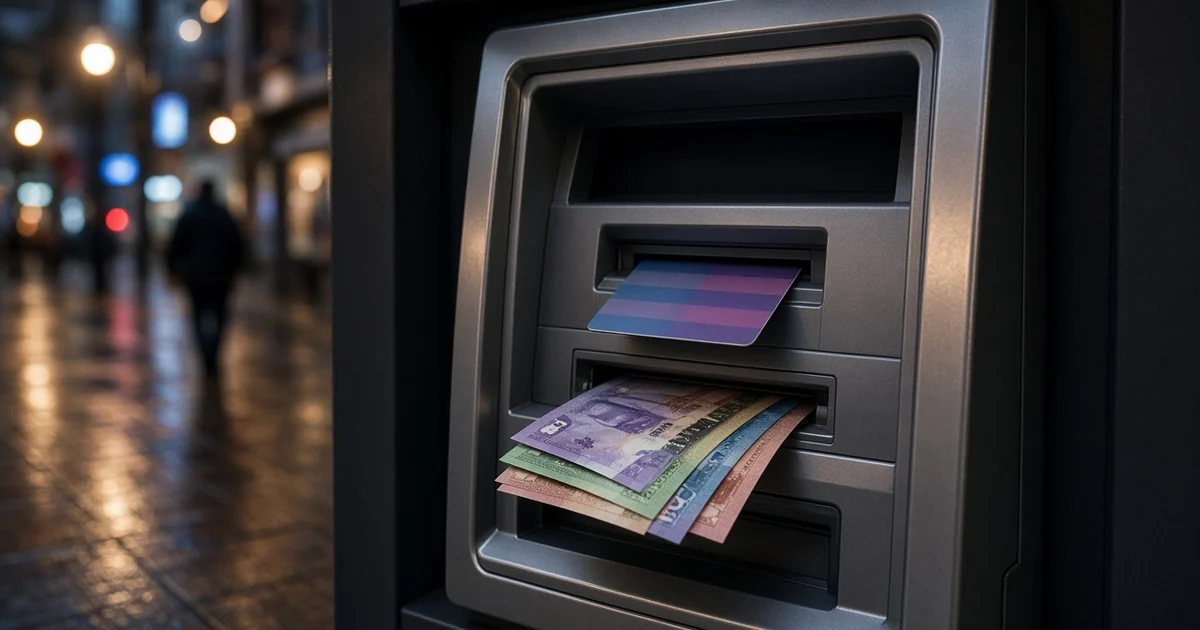
A cash advance is when you use a credit card to get cash or something that works like cash. Unlike purchases, cash advances don’t get an interest-free grace period: interest starts the day the transaction is made, and the rate is usually higher than your purchase rate. Many cards also charge a fee on top.
What counts as a cash advance
The obvious one is taking cash out of an ATM with your credit card. But cash advance rules often cover more than that. Scotiabank’s card pages, for example, say the cash advance rate “applies to cash advances, balance transfers, and cash-like transactions.” Depending on the issuer, that can include:
- ATM withdrawals and over-the-counter cash at a bank
- Balance transfers from another card or loan
- Convenience cheques
- Money orders, foreign currency or traveller’s cheques bought with the card
- Some gambling, lottery and casino transactions
- Some person-to-person payment or money transfer services
Each issuer defines “cash-like” in its cardholder agreement, so check yours before you do anything unusual with the card.
How much does it cost?
There are usually three costs:
- A higher interest rate. Across major Canadian cards, cash advance rates are typically 22% to 24%. Some examples:
| Card | Purchase rate | Cash advance rate |
|---|---|---|
| TD Rewards Visa | 21.99% | 22.99% |
| BMO CashBack Mastercard | 21.99% | 23.99% (21.99% in Quebec) |
| CIBC Dividend Visa | 21.99% | 22.99% |
| MBNA True Line Mastercard | 12.99% | 24.99% |
The MBNA True Line is a good reminder that a low purchase rate doesn’t always mean a low cash advance rate.
-
No grace period. Interest starts on the day of the advance, even if you pay your full statement balance by the due date.
-
A transaction fee. Many issuers charge a fee per advance, often a flat amount or a percentage, whichever is higher. ATM operators may add their own fee too.
A quick example
Say you take a $500 cash advance on a card with a 22.99% cash advance rate and repay it 30 days later. The interest is roughly $500 × 22.99% × 30 ÷ 365, or about $9.45, plus any transaction fee. That’s for one month. Leave it longer and it keeps growing daily.
Cards with lower cash advance rates
If you know you’ll need cash access from a card, low-rate cards price cash advances much closer to their purchase rate:
- Scotiabank Value Visa: 13.99% on purchases and cash advances, $29 annual fee.
- CIBC Select Visa: 13.99% on purchases and cash advances, $29 annual fee.
- BMO Preferred Rate Mastercard: 13.99% on purchases, 15.99% on cash advances, $29 annual fee (rebated with a BMO Performance chequing account).
- RBC Visa Classic Low Rate Option: 12.99% on purchases, 14.99% on cash advances, $20 annual fee.
See low interest vs rewards cards for when a low-rate card makes sense.
How payments are applied
When you make a payment, anything above your minimum payment is generally applied to the balance with the higher interest rate first, which is often the cash advance. Our guide to interest, grace periods and minimum payments explains the rules.
Balance transfers are cash advances too
Many balance transfer offers are technically cash advance promotions. For example, the Scotia Momentum Visa’s current offer is a 0.99% introductory rate on balance transfers for the first 9 months, with a 2% fee per transfer, and after that the amount moves to the cash advance rate (currently 22.99%). That can save money if you pay it off within the promotional period, but read the terms. See balance transfers explained.
Cheaper ways to get cash
- Use your debit card at your own bank’s ATM.
- Use an overdraft or line of credit, which often costs less than a credit card cash advance.
- Travelling? A card with no foreign transaction fees for purchases, plus a debit card for cash, is usually cheaper than a credit card cash advance abroad. See foreign transaction fees.
FAQ
Is there a grace period on cash advances? No. Interest starts on the day the cash advance is made.
Do cash advances earn rewards? Generally no. Rewards are earned on eligible purchases, not cash advances or balance transfers.
Does a cash advance hurt my credit score? Not directly, but it adds to your balance and raises your utilization, which can affect your score.
What to do next
If you regularly need short-term cash, compare the low interest hub. Then check the issuer’s rates and fees page for the current cash advance rate and fee.
This is not financial advice. Rates and fees change.