Credit Card Interest, Grace Periods and Minimum Payments in Canada
Pay your full statement balance by the due date and you pay no interest on purchases. Miss that by even a dollar and the maths changes. Here's how interest, grace periods and minimum payments work.
By Andrew Updated How we review cards

If you pay your full statement balance by the due date every month, you pay no interest on purchases. That’s the grace period, and in Canada it must be at least 21 days at federally regulated institutions. If you pay anything less than the full balance, you generally lose the grace period on those purchases, and interest is charged from the date of each purchase. The minimum payment keeps your account in good standing, but it’s designed to take years to clear a balance.
This guide explains each piece in plain terms, with examples from the Financial Consumer Agency of Canada (FCAC), so you can see exactly what a balance costs.
The billing cycle and the statement
Your card works in cycles, usually about a month long.
- Statement period: purchases made during the period appear on the statement.
- Statement date: the day the period ends and your statement is produced.
- Payment due date: the date by which you need to pay.
The gap between the statement date and the due date is the grace period. FCAC’s guide to how credit cards work says federally regulated financial institutions must give you a grace period of at least 21 days on new purchases, starting at the end of the billing period.
FCAC’s example: you buy something on January 15. Your statement is dated February 1. To avoid interest on that purchase, you need to pay the full balance by February 21. That means a purchase early in a cycle can go interest-free for well over a month.
If a due date falls on a weekend or holiday, FCAC says you can make the payment on the next business day without penalty.
What the grace period doesn’t cover
FCAC lists the exceptions. The grace period doesn’t apply to:
- Cash advances, including cash withdrawn with your credit card.
- Cash-like transactions, such as buying foreign currency, money orders or gambling chips, depending on your card’s terms.
- Balance transfers.
Interest on these starts the day the transaction is made, even if you pay your full balance on time. Cash advances often carry a higher interest rate than purchases, as well as a fee. FCAC’s examples use 19% for purchases and 22% for cash advances, which is typical. For balance transfers specifically, see our balance transfers guide.
Why paying “most” of the balance still costs interest
This is the part many people find surprising. Interest-free purchases depend on paying the full balance by the due date.
According to FCAC’s guide to paying off your credit card, if you don’t pay the full balance, you are charged interest on purchases from the date of each purchase, not just on what’s left over.
Suppose you spend $1,500 in a month and pay $1,400. You might expect interest on $100. In practice, you lose the grace period, and interest is calculated on purchases from their transaction dates until they’re paid. The exact calculation depends on your cardholder agreement, which must explain how interest is calculated, but the result is usually far more than interest on $100.
Once you’re carrying a balance, the next month’s new purchases may also start accruing interest right away, until you pay the balance in full again. Getting back to a $0 balance resets things.
How interest is calculated
Card interest rates are quoted as an annual rate, but interest is usually calculated daily and charged monthly. A rough way to estimate a month’s interest:
Balance × annual rate ÷ 365 × days in the period
For a $1,000 balance at 20.99% over 30 days: $1,000 × 0.2099 ÷ 365 × 30 ≈ $17.25.
That doesn’t sound like much, but it repeats every month, and unpaid interest is added to your balance, so you pay interest on interest.
How minimum payments are calculated
Your statement shows a minimum payment, the smallest amount you must pay to keep your account in good standing. FCAC says the minimum is usually calculated as either:
- a fixed amount (often around $10) plus interest and fees, or
- the greater of a fixed amount (often about $10) or a percentage of the balance (often about 3%).
Quebec is different. FCAC notes that in Quebec, the minimum payment rose in stages, and since August 1, 2025 it has been 5% of the balance.
How long minimums take
FCAC’s example shows how expensive slow repayment gets. For a $2,000 balance at 18% interest:
| Monthly payment | Time to pay off | Total interest |
|---|---|---|
| $60 | 3 years, 11 months | $793 |
| $160 | 1 year, 2 months | $231 |
Paying an extra $100 a month saves more than $550 in interest and pays the balance off almost three years sooner. Your statement must also show an estimate of how long it would take to pay off the balance if you made only the minimum payment each month.
You can run your own numbers with FCAC’s credit card payment calculator.
How your payment is applied
If your balance includes amounts at different rates (say, purchases at 20.99% and a balance transfer at a promotional rate), the order your payment is applied matters. FCAC explains that federally regulated institutions can apply the minimum payment to the lowest-rate balance first, but any amount above the minimum must go either to the highest-rate balance first, or proportionally across balances. In Quebec, payments above the minimum go to the highest-rate balance first.
That’s another reason to pay more than the minimum when you carry different types of balance.
What happens if you miss a payment
Missing a minimum payment can have several consequences, depending on your cardholder agreement:
- A higher interest rate. Some agreements let the issuer raise your rate after missed payments. FCAC says the issuer must notify you before a rate increase takes effect.
- Loss of a promotional rate, such as a balance transfer rate.
- Fees, such as a late or over-limit fee where your agreement allows it.
- Credit score damage. A payment 30 days or more late can be reported to the credit bureaus. Our credit scores guide explains how payment history affects your score.
Setting up an automatic payment, at least for the minimum, protects you from accidental misses. Many people set autopay for the full statement balance.
Skipping payments and “payment holidays”
Issuers occasionally offer to let you skip a payment. FCAC cautions that interest keeps accruing during a payment holiday, so the balance grows. Accept one only if you understand the cost.
Practical ways to pay less interest
- Pay the full statement balance every month if you can. That’s the single biggest lever.
- If you can’t, pay as much as possible, not just the minimum, and stop adding new purchases to the card.
- Pay early in the cycle. Interest is calculated daily, so paying part of the balance mid-cycle reduces the average balance.
- Avoid cash advances on a credit card. Use debit for cash.
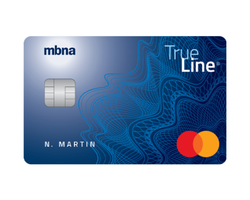
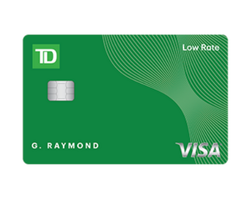
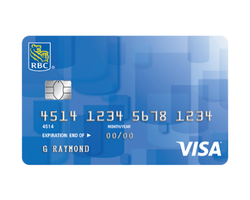
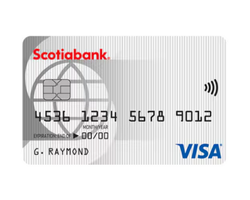
- Consider a low-rate card if you regularly carry a balance. Low-rate cards such as the MBNA True Line Mastercard, TD Low Rate Visa, RBC Visa Classic Low Rate Option and Scotiabank Value Visa charge a lower purchase rate than typical rewards cards. Our low interest vs rewards guide helps you decide.
- Consider a balance transfer to pay down existing debt faster at a lower rate, with a plan to repay before the promotion ends.
- Get help early. If balances are growing, talk to your bank, or contact a non-profit credit counselling service. FCAC has information on managing debt.
FAQ
What is the grace period on credit cards in Canada? At federally regulated institutions, at least 21 days from the end of the statement period, for new purchases, when you pay your full balance by the due date.
If I pay the minimum, do I pay interest? Yes. Paying the minimum avoids late consequences, but interest is charged on the unpaid balance, generally from each purchase date.
Is there a grace period on cash advances? No. Interest starts on the day of the cash advance.
How is the minimum payment calculated? Usually a fixed amount (around $10) plus interest and fees, or the greater of a fixed amount or a percentage (around 3%) of the balance. In Quebec, it’s 5% of the balance.
Does paying before the statement date help? It reduces the balance reported to the credit bureaus, which can help your utilization, and it reduces interest if you’re carrying a balance. If you pay in full every month, the timing within the cycle doesn’t change interest (you pay none).
What to do next
If you carry a balance most months, a lower interest rate matters more than rewards. Compare options on the low interest hub, and use FCAC’s calculator to see how a bigger monthly payment changes your payoff date.