Balance Transfers Explained: How They Work in Canada and When They Save Money
A balance transfer moves debt from a high-interest card to one with a lower promotional rate. It can save real money, but only if you understand the fee, the deadline and the payment rules.
By Andrew Updated How we review cards

A balance transfer moves money you owe on one credit card to a different card, usually one offering a low promotional interest rate for a limited time. You normally pay a one-time fee on the amount moved. If you use the low-rate period to pay the debt down, you can save hundreds of dollars in interest. If you don’t, you have simply moved the problem and paid a fee to do it.
This guide explains how balance transfers work in Canada, the fine print that trips people up, and a practical plan for using one well.
How a balance transfer works
The Financial Consumer Agency of Canada (FCAC) describes balance transfers on its How credit cards work page: you move a balance from an old card to a new one, which generally has a lower rate, and you usually pay a fee that is a percentage of the amount transferred.
In practice:
- You apply for a card with a balance transfer offer, or accept an offer on a card you already hold.
- You ask the new issuer to pay off a specific amount on your old card. You give them the old card’s account number, or sometimes use a balance transfer cheque.
- The new issuer pays the old card. The transferred amount, plus the fee, now sits on the new card at the promotional rate.
- When the promotion ends, any amount still owing switches to the card’s regular balance transfer or cash advance rate, which is often high.
Most issuers won’t let you transfer a balance between two of their own cards. BMO’s credit card offer terms, for example, state that balances from other BMO credit card accounts are not eligible. So the new card usually comes from a different bank.
The fee: what you pay up front
FCAC gives a simple example. Transfer $1,000 with a 3% fee and you pay $30. That fee is added to your balance right away.
Fees vary by card and by offer. Some low-rate cards advertise smaller transfer fees than others, and some offers charge more. Look for these details on the card’s offer page:
- The fee percentage, and any minimum fee per transfer.
- The promotional rate (sometimes 0%, sometimes a low single-digit rate).
- How long the promotion lasts, such as 6, 9 or 12 months.
- How soon you must complete the transfer. Many offers only apply to transfers made within a set number of days after opening the account.
- The rate that applies afterwards.
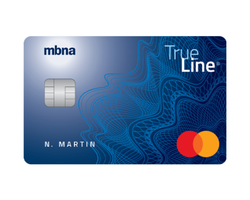
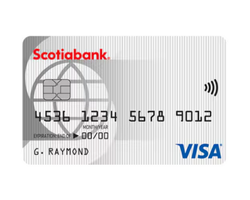
Cards that have offered promotional balance transfer rates include low-rate products like the MBNA True Line Mastercard and the Scotiabank Value Visa. Offers change frequently, so check the live card page. Our low interest hub lists current low-rate cards.
Does it actually save money? A worked example
Here is a simplified illustration. Suppose you owe $5,000 on a card charging 20.99% and can afford to pay $417 a month.
| Scenario | What happens over 12 months (simplified monthly calculation) |
|---|---|
| Stay on the 20.99% card | You pay roughly $650 in interest and still owe roughly $640 at the end of the year |
| Transfer to a 0% offer with a 3% fee | You pay a $150 fee up front and the $5,000 is paid off in about 12 months |
In this example the transfer saves several hundred dollars and gets you out of debt sooner. The math works because the payment is big enough to clear most of the balance before the promotion ends. If you could only pay $100 a month, most of the balance would still be there when the regular rate kicks in, and the saving would be much smaller.
Run your own numbers with FCAC’s credit card payment calculator before you apply.
The fine print that catches people
Your payments may go to the promotional balance first
FCAC’s Paying off your credit card page explains that your minimum payment typically goes to the part of your balance with the lowest interest rate. That is usually the promotional balance. Anything you pay above the minimum goes either to the highest-rate portion first or proportionally across the balance, depending on your issuer.
Why this matters: if you also make purchases on the balance transfer card, those purchases sit at the regular purchase rate. Your minimum payment chips away at the 0% balance while the purchases build interest at full rate.
New purchases can lose their grace period
FCAC notes that the interest-free grace period doesn’t apply to balance transfers. It also says that if you don’t pay your balance in full by the due date, you pay interest on purchases from the date you made them. While you carry a transferred balance, you aren’t paying the full balance, so new purchases on that card can start charging interest right away.
BMO’s offer terms spell this out with an example: if you transfer $5,000 and spend $2,000 on purchases in the same statement period, you must pay the whole $7,000 by the due date to avoid interest on the purchases.
The cleanest rule: don’t use the balance transfer card for purchases. Keep spending on a different card that you pay in full, or switch to debit while you pay down the debt.
Missing a payment can end the promotion
FCAC warns that missing a payment may cost you your promotional rate and can increase your interest rate. Set up an automatic payment for at least the minimum on the day you open the account.
The regular rate afterwards
When the promotional period ends, the remaining balance moves to the regular rate for balance transfers, which on many cards matches the cash advance rate. Plan to pay the balance off before then, or have a second plan ready.
Product switches don’t carry promotions
If you later upgrade or switch the card to another product at the same bank, promotional rates may not follow you. Scotiabank’s credit card upgrade terms, for example, say promotional interest rates on your current card won’t transfer to the upgraded card.
A step-by-step plan
- Add up what you owe and the interest rates on each card.
- Decide on a monthly payment you can sustain. Divide the balance (plus the fee) by the number of promotional months. If that number is far beyond what you can pay, a transfer alone won’t solve the problem.
- Compare offers: fee, rate, length and the deadline to transfer. A longer promotion with a slightly higher fee can be better if you need the time.
- Apply for one card, not several. Each application is a hard inquiry on your credit report (see how credit scores work).
- Request the transfer promptly, within the offer’s window, and keep paying your old card until the transfer shows as complete.
- Set up automatic payments for your planned amount, not just the minimum.
- Put the old card away but consider keeping it open. Closing it reduces your available credit, which can raise your utilization.
- Diary the end date a month or two before the promotion ends.
When a balance transfer is the wrong tool
- The debt is too large to make real progress in the promotional period. A consolidation loan with a fixed term, or a conversation with a non-profit credit counsellor, may be better.
- You are likely to keep spending on credit. A transfer frees up room on your old card. If that room fills up again, you end up with two balances.
- You already pay in full every month. A balance transfer card offers you nothing. A rewards card makes more sense; see our low interest vs rewards guide.
Alternatives to compare
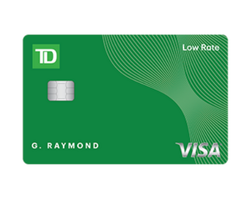
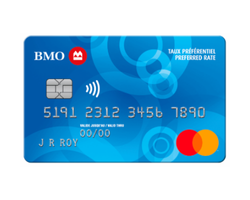
- A low-rate card with a permanently lower purchase rate helps if you sometimes carry a balance. The BMO Preferred Rate Mastercard charges 13.99% on purchases and, for new accounts from applications on or after September 15, 2026, 0% on balance transfers for 18 months with a 3% fee (minimum transfer $100). After that window, a remaining transferred balance moves to the 15.99% cash advance rate. The TD Low Rate Visa is the purchase-teaser comparison, not a transfer offer.
- An instalment plan on your existing card. Many issuers let you convert large purchases to fixed monthly instalments at a lower rate or for a fee. Check the cost against a transfer.
- A personal loan or line of credit. FCAC suggests these as cheaper ways to borrow than cash advances, and they can also beat a revolving card balance.
FAQ
Does a balance transfer hurt my credit score? Applying for a new card creates a hard inquiry, which can have a small, temporary effect. Paying the debt down over the promotion lowers your utilization, which tends to help.
Can I transfer a balance to a card from the same bank? Usually not. Most issuers only accept transfers from other institutions’ cards. Check the offer terms.
Is there an interest-free grace period on balance transfers? No. FCAC says the grace period doesn’t apply to balance transfers. Interest at the promotional rate applies from the transfer date.
What happens if I don’t pay off the balance before the promotion ends? The remaining amount is charged the card’s regular balance transfer rate, which is often high. Plan your payments so this doesn’t happen.
Can I transfer a balance more than once? Issuers decide what offers they make you. Moving debt repeatedly costs a fee each time and doesn’t reduce what you owe, so treat it as a one-time reset rather than a habit.
What to do next
Write down your balances and rates, calculate a realistic monthly payment, then compare offers on the low interest hub. Our guide to interest, grace periods and minimum payments explains the mechanics behind everything above.