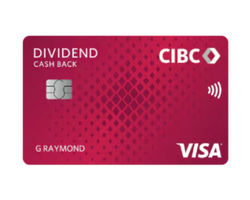
Who this card is for
A good fit if you…
- CIBC customers who want cash back in the same app as their chequing account, without a Platinum fee or a Visa Infinite income test.
- Households that put groceries on one Visa and will also park gas, transit, dining, and bills for 1%, even if the catch-all is only 0.5%.
- Applicants who meet the modest household income figure in eligibility and who want extra cards at no extra annual fee — the issuer currently lists up to a small number of extras at $0.
- Anyone who pays in full. Two percent groceries will not outrun the purchase rate.
Skip it if you…
- Households that will clear Platinum’s fee with the gap from 2% to 3% on grocery and gas. That is Dividend Platinum.
- Applicants who already meet Infinite income and whose supermarket is huge. Dividend Visa Infinite currently lists 4% on that same grocery and fuel stack.
- Shoppers who can pick two 2% categories at $0 and whose grocer is not the whole story. Tangerine will usually blend higher than 2% / 1% / 0.5%.
- Students looking for the student Dividend product. That is a different card, not this everyday Visa.
Pros and cons
Pros
- No annual fee, so 2% at eligible grocers does not have to beat a membership first.
- The secondary 1% list — gas, EV charging, commuter transit, restaurants, recurring payments, and eligible CIBC-by-Expedia travel — is the same personality as Platinum and Infinite, just at a lower rate.
- Additional cards currently show $0 for up to a listed number of extras, which paid Dividend rungs do not always match after year one.
- The household income bar in the eligibility text is the accessible Dividend door, not Infinite’s test.
- Visa acceptance is straightforward at Canadian merchants that still skip American Express. Costco is still a Mastercard problem, not a CIBC Dividend problem.
Cons
- 0.5% on everything else is a weak catch-all. Amazon, big-box, and warehouse spend drag the blended rate down.
- No welcome bonus is currently listed — no headline, detailed offer, value, or eligibility terms. Year-one value is just the earn rates.
- Merchant coding is the same strict Dividend list: grocery means grocery stores and supermarkets, gas means service stations and EV charging with a listed MCC, and “recurring” means the merchant flags it as recurring.
- Warehouse clubs, restaurants inside grocers, and travel booked outside CIBC by Expedia are easy ways to miss even the 1% bucket.
- Check the issuer’s site for current insurance coverage. This is a $0 cash-back Visa, not a travel-medical product.
Fees and value: is the annual fee worth it?
First-year snapshot (estimate)
- Annual fee
- $0
- Estimated welcome bonus value
- N/A
- Bonus minus fee (estimate)
- —
This is a simple comparison of the estimated welcome-bonus value against the annual fee. It ignores rewards on spending, credits you have to remember to use, and interest if you carry a balance. Offers change — verify with the issuer.
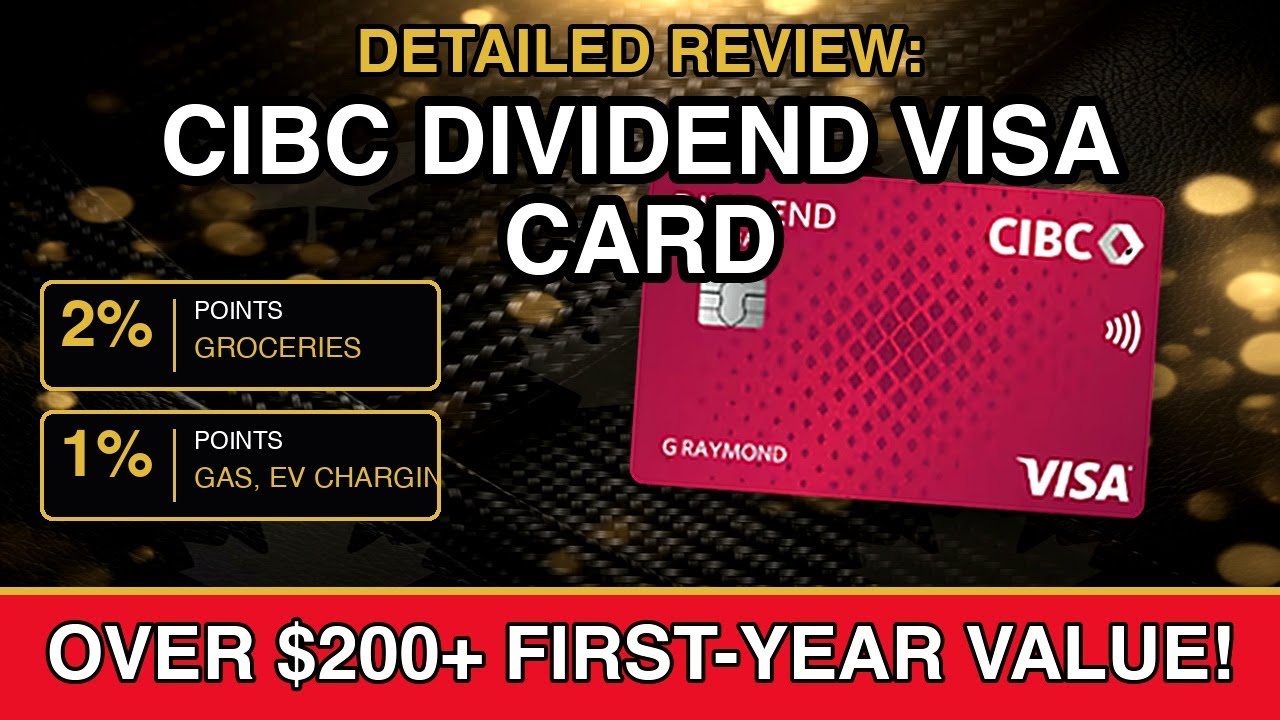
This is a $0-fee card, with extra cards at $0, so the usual “bonus minus annual fee” snapshot on this page will look empty or unhelpful — especially with no welcome bonus listed. Value is 2% on grocery store and supermarket spend, 1% on the secondary stack, and 0.5% on the rest.
If the supermarket is the statement and you already bank at CIBC, this is a simple everyday Visa. If grocery and gas are large enough that an extra point (Platinum’s 3% minus this 2%) clears Platinum’s ongoing fee, Platinum wins.
If Infinite income is already in hand and the shop is huge, Infinite’s 4% is the comparison that matters. If two Tangerine categories would cover more of the month, Tangerine wins at the same $0.
There is no first-year fee rebate to hide a weak fit. Offers change.
Pay in full.
Rewards and earn rates explained
Rewards program: Cash Back
This card pays cash back, not points. The current stack is 2% on purchases at merchants classified as grocery stores and supermarkets; 1% on gas service stations, automated fuel dispensers, and electric-vehicle charging with the MCC called out in the detailed benefits, Canadian commuter transportation (subway, streetcar, taxi, limousine, rideshare — not air, car rental, or cruises), eating and drinking places, recurring payments the merchant classifies as recurring, and eligible CIBC-by-Expedia bookings; and 0.5% on everything else.
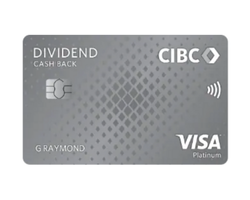
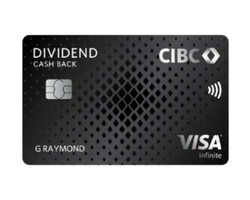
Platinum currently prints 3% on that grocery/gas/EV list and 2% on the secondary stack. Infinite currently prints 4% and 2%.
Those definitions are specific: Costco, a superstore that codes as a mass merchant, or a meal-kit company can miss 2%. Redeem as cash back according to CIBC’s rules.
If you want chosen 2% categories at $0, that is Tangerine.
Welcome bonus: how to unlock it
N/A
No welcome bonus is currently listed — no headline, detailed offer, dollar value, or eligibility terms. Treat that as “none on file,” not as a hidden 10% window copied from Platinum or Infinite.
If CIBC is running a limited-time cash offer on the no-fee Dividend Visa, it will be on their application page — use that, not this paragraph. Recent Dividend clients should still read live terms before assuming a product-change from a cancelled Platinum pays anything.
Welcome bonus eligibility: N/A
FAQ
Is the CIBC Dividend Visa Card worth it in 2026?
It is worth it when you want CIBC grocery cash back at $0 and the 2% / 1% / 0.5% stack matches how you spend. It is not worth it as a 3% Platinum substitute, a 4% Infinite substitute, or a card you revolve.
Dividend Visa vs Dividend Platinum vs Dividend Visa Infinite?
CIBC Dividend Visa vs Tangerine Money-Back?
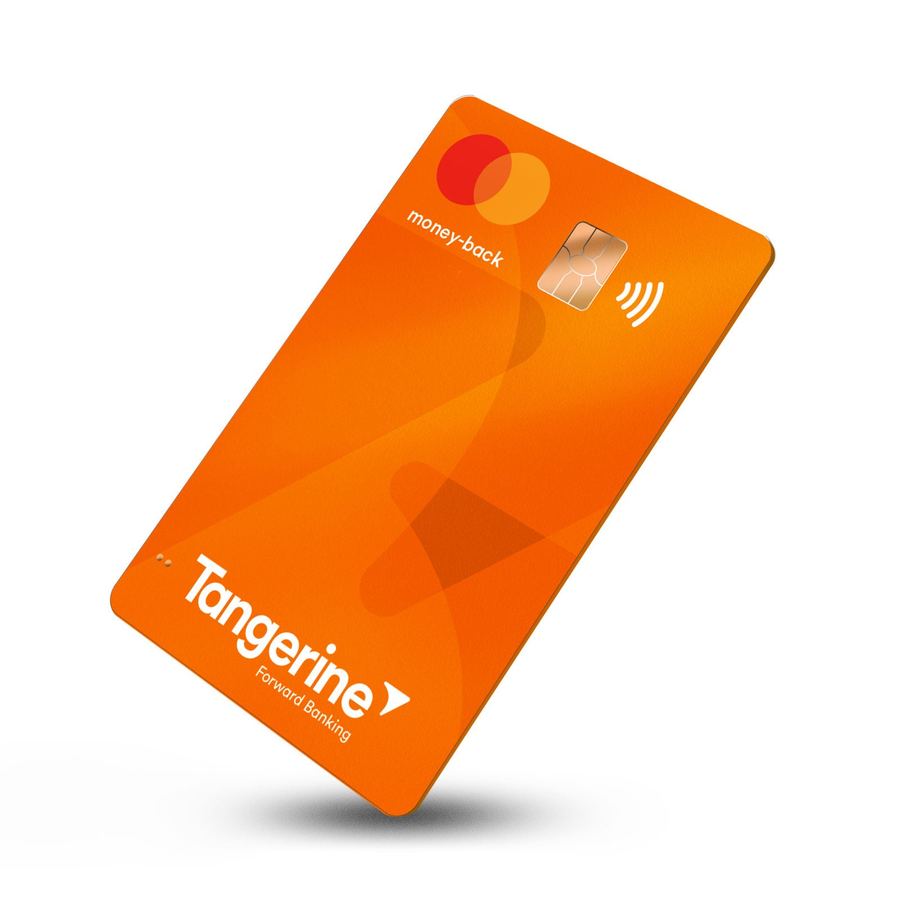
Tangerine lets you pick 2% categories at $0. Dividend locks 2% to grocery stores and pays 1% then 0.5% on a fixed list. Choose Tangerine if you want control and a second 2% bucket. Choose Dividend if you already bank at CIBC and the supermarket plus the 1% everyday list matches the month.
Can I use this card at Costco?
Costco Canada accepts Mastercard, not Visa. This CIBC product is a Visa, so it will not go through at Costco warehouses. Use a Mastercard cash-back card for the shop, and use this Visa at grocers that code as grocery stores.
Does this card charge foreign-exchange fees?
Most Canadian no-fee Visas add a foreign-conversion fee on foreign-currency purchases. Dividend Visa is a domestic cash-back card, not a no-FX travel card. For overseas spend, compare Scotiabank Passport Visa Infinite, and confirm CIBC’s current FX rate in the agreement.
Compare related cards and guides
More Canadian credit card lists that match this product, plus a few cards people usually compare it with.
- CIBC Dividend Platinum Visa Card review · CIBC · $99 annual fee
- CIBC Dividend Visa Infinite Card review · CIBC · $120 annual fee
- Tangerine Money-Back Credit Card review · Tangerine · $0 annual fee