Foreign Transaction Fees in Canada: What They Cost and How to Avoid Them
Most Canadian credit cards add about 2.5% to anything charged in another currency, including online purchases. Here is how the fee is calculated and the cleanest ways to avoid it.
By Andrew Updated How we review cards

A foreign transaction fee is a charge your card issuer adds when you pay in a currency other than Canadian dollars. On most Canadian credit cards it is about 2.5% of the converted amount, and it applies whether you are standing in a shop in Lisbon or buying from a U.S. website at your kitchen table. A small number of cards waive it. Everyone else can at least avoid the traps that make it worse.
This guide explains how the fee is calculated, where it shows up unexpectedly, what dynamic currency conversion is and why you should usually say no, and the practical ways to keep more of your money when you spend in another currency.
How the fee is calculated
The Financial Consumer Agency of Canada (FCAC) explains the process on its How credit cards work page. Two things happen:
- The purchase is converted to Canadian dollars at an exchange rate. Some issuers convert directly; some convert to U.S. dollars first and then to Canadian dollars.
- The issuer adds its foreign currency conversion charge, calculated on the converted Canadian dollar amount.
FCAC’s own example uses a €1,000 purchase at an exchange rate of 1.45 with a 2.5% conversion charge:
| Step | Amount |
|---|---|
| Convert €1,000 at 1.45 | $1,450.00 |
| 2.5% conversion charge | $36.25 |
| Total on your statement | $1,486.25 |
The fee is not always shown as a separate line. Often it is built into the converted amount, which is why many people don’t notice it. Your cardholder agreement or the information box you received when you applied lists the exact percentage.
Where the fee shows up unexpectedly
- Online shopping from foreign retailers. If the checkout charges in U.S. dollars, pounds or euros, the fee applies even though you never left home.
- Subscriptions and apps billed in USD. Some software, streaming and app-store charges are billed in U.S. dollars.
- Canadian-looking businesses that process abroad. A website with a “.ca” address can still charge in another currency. Check the currency at checkout.
- Refunds. If you return something bought in a foreign currency, the refund is converted at the rate on the day it is processed. FCAC notes that the amount can differ from what you paid because rates change daily.
- Cash withdrawals abroad. Using a credit card at a foreign ATM is a cash advance: interest starts immediately, a cash advance fee usually applies (FCAC says it is typically higher abroad), and a currency conversion charge may apply too.
Dynamic currency conversion: just say no
At foreign terminals, ATMs and websites, you may be asked whether you want to pay in Canadian dollars instead of the local currency. That offer is called dynamic currency conversion (DCC). It feels reassuring, because you see a familiar number. But the merchant or ATM operator picks the exchange rate, and it often includes its own markup.
Visa’s dynamic currency conversion explainer says merchants and ATMs must show the exchange rate and any markup, must let you accept or decline, and must not choose for you. If those details are missing or you feel pressured, Visa recommends declining the conversion and reporting it to your card issuer. In practice, the safest default is to choose the local currency and let your card network do the conversion. Even if your card charges a 2.5% foreign transaction fee, the DCC rate is often worse. And if your card has no foreign transaction fee, accepting DCC throws that benefit away.
If a terminal converts without asking, ask the merchant to re-run the payment in local currency before you sign or tap.
Ways to avoid or reduce the fee
1. Use a card with no foreign transaction fees
A few Canadian cards charge no conversion fee at all, so you pay only the network exchange rate. At the time of writing, examples include:
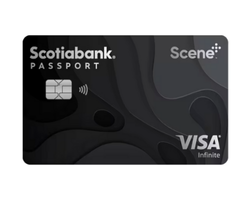
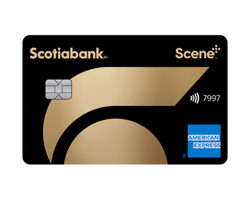
- Scotiabank Passport Visa Infinite and the Scotiabank Gold American Express. Scotiabank’s card pages say you avoid “the typical 2.5% foreign transaction fee” and “just the exchange rate applies.”
- Home Trust Preferred Visa, a no-annual-fee card. Home Trust’s card page says foreign currency transactions are converted at Visa’s exchange rate “without additional surcharge.” It is not available in Quebec, and foreign transactions are not eligible for its cash back.
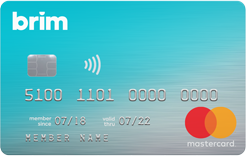
Some cards charge a reduced fee rather than none. Brim’s personal credit cards page lists a 1.5% foreign transaction fee on the no-fee Brim Mastercard and on the Brim World Elite Mastercard.
Read the fine print on rewards, too. Scotiabank’s Gold Amex terms, for example, say accelerated Scene+ earn applies to purchases in Canadian currency only, and foreign currency purchases earn the base rate. A no-fee card saves you 2.5%; it may not also give you its best earn rate abroad.
2. Do the break-even math on an annual fee
A card with no foreign transaction fees but an annual fee only pays off if you spend enough in other currencies. At a 2.5% fee, you save $25 for every $1,000 of foreign spending. A $150 annual fee needs about $6,000 a year of foreign purchases to break even on that feature alone. Lounge passes, insurance and earn rates may tip the balance, but count only what you will use. Our guide to choosing a travel card has a step for pricing this in.
3. Consider a U.S. dollar card for regular USD spending
If you spend in U.S. dollars often, a card billed in USD avoids conversion on those USD purchases. You pay the statement from a U.S. dollar bank account. That only helps if you already earn or hold U.S. dollars, or convert at a good rate in bulk. On the BMO U.S. Dollar Mastercard, a charge that is not in U.S. dollars still converts to USD at the network rate plus 2.50%. The BMO Preferred Rate Mastercard, a Canadian-dollar rate card, converts foreign-currency purchases at the network rate plus 2.50% as well. Our U.S. dollar credit cards guide covers when USD billing is worth the annual fee.
4. Know when “bonus” earn on foreign spending doesn’t cover the fee
Some cards advertise extra rewards on purchases in U.S. dollars while still charging a conversion fee. Rogers Bank’s disclosure lists a 2.5% foreign currency conversion charge on its cards, including the Rogers Red World Elite Mastercard, which earns a higher cash back rate on U.S. dollar purchases. The net benefit is the difference between the two, before any network exchange spread. That can still beat a regular card, but it is not the same as paying no fee.
5. Avoid cash advances abroad
For cash, a debit card linked to a bank account with low foreign ATM fees usually costs less than a credit card cash advance. If you must use a credit card for cash, pay the balance off right away, because interest runs from the day you withdraw.
A quick pre-trip checklist
- Look up your card’s foreign transaction fee in your agreement or information box.
- Decide which card you will use for foreign purchases, ideally one with no conversion fee.
- Carry a backup card on a different network. Acceptance abroad varies; see our Amex acceptance guide.
- Plan to decline dynamic currency conversion at terminals and ATMs.
- Check that your travel insurance covers your trip length; see our travel insurance explainer.
FAQ
Do I pay foreign transaction fees on U.S. websites? Yes, if the purchase is charged in U.S. dollars. The fee depends on the currency of the transaction, not where you are.
What is a typical foreign transaction fee in Canada? FCAC’s example uses 2.5%, which is common among Canadian credit cards. Some cards charge less, and a few charge none. Your card agreement lists your rate.
Should I pay in Canadian dollars or local currency when travelling? Usually local currency. Choosing Canadian dollars triggers dynamic currency conversion, where the merchant or ATM sets the rate and may add a markup.
Do debit cards charge foreign transaction fees? Many do apply a conversion markup and foreign ATM fees. Check your bank account’s fee schedule.
Is a no foreign transaction fee card worth it? If you spend a few thousand dollars a year in other currencies, often yes, especially if the card has no annual fee or perks you would use anyway.
What to do next
Find your current card’s conversion fee, estimate your yearly foreign spending, and compare it against cards on the travel hub and the U.S. dollar hub.