USD Credit Cards for Canadians Who Shop or Travel in the States
A USD-billed Canadian card is worth it when you already keep a U.S. dollar account and spend in USD often enough to beat the USD annual fee. It does not help with euros.
By Andrew Updated How we review cards

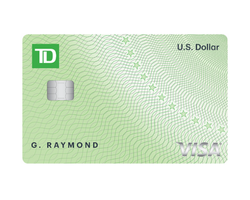
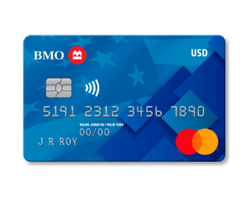
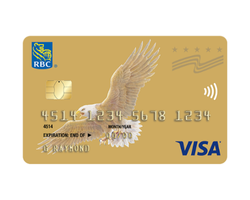
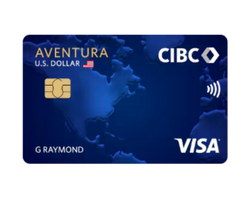
If you already hold a U.S. dollar bank account and you pay U.S. merchants in USD — Amazon.com, Florida bills, U.S. subscriptions, cross-border shopping — a Canadian USD-billed card can remove the credit-card foreign-currency conversion on those USD charges. TD U.S. Dollar Visa is the plain, cheaper-fee Visa. BMO U.S. Dollar Mastercard is the Mastercard: a US$49 annual fee, rebated the next year when purchases total US$3,000 or more, a free additional cardholder, no rewards, and no welcome offer. USD purchases on that card avoid a conversion. Purchases in other currencies convert to U.S. dollars at the network rate plus 2.50%. RBC U.S. Dollar Visa Gold adds Avion on USD spend at a higher USD fee. CIBC U.S. Dollar Aventura Gold keeps you in Aventura on a USD statement.
If you do not have a USD account, you will still convert CAD when you pay the bill. The card did not make USD “free.” If your foreign spend is euros or sterling, this product class is the wrong tool — use a no-FX CAD card such as Passport Visa Infinite instead. See how to choose a travel card.
The live inventory is on the U.S. dollar hub. Fees are often quoted in USD. Do not compare a $39 USD fee to a $120 CAD fee without converting.
CAD card with FX versus USD billing versus paying cash
Three different problems get mixed together.
- CAD rewards card + ~2.5% issuer FX fee. Common on Canadian Visas and Mastercards, and on American Express Canada cards too. Painful on a $5,000 USD trip.
- No-FX CAD card (Passport). Issuer FX fee is $0; you still pay in CAD at the network conversion rate.
- USD-billed card + USD account. The statement is in dollars the merchant charged. You fund it from USD you already hold (payroll, U.S. account, transferred USD). You avoid the card’s conversion. You do not avoid a bad USD purchase rate if you bought those dollars at a terrible branch spread.
A USD card is for people who have USD. It is not a magic mid-market converter for CAD chequing.
| Need | Better product | Why |
|---|---|---|
| Occasional U.S. trip, CAD only | No-FX CAD Visa | No USD account required |
| Regular USD bills, already have USD | USD card from your bank | Statement matches the currency |
| Want Avion on USD spend | RBC USD Visa Gold | Higher USD fee; 1x-class Avion in our review |
| Want Aventura on USD spend | CIBC USD Aventura Gold | Weaker earn than CAD Aventura Gold |
| Want Mastercard / Costco | BMO USD Mastercard | US$49, rebated next year after US$3,000 in purchases; no rewards |
| Want cheapest USD Visa, no rewards | TD USD Visa | Fee-versus-FX test only |
| Scene+ grocery in CAD | Stay on a CAD Scene+ card | USD cards are not 3x Sobeys products |
Scotiabank U.S. Dollar Visa is another no-frills USD Visa if you already bank at Scotia. Scene+ grocery rules live on CAD Amex and Visa products, not on that USD card.
The fee-versus-FX test
Most no-rewards USD cards sit in a few-dozen USD per year (TD’s card is a $39-class USD fee; CIBC’s USD Aventura Gold is $35-class USD). BMO’s U.S. Dollar Mastercard is US$49, rebated the following year when purchases total US$3,000 or more, with a free additional cardholder. RBC’s USD Gold is higher because you are buying Avion. BMO does not list a welcome offer.
A common Canadian FX fee is about 2.5% on the converted amount. On $2,000 USD of card spend, 2.5% is $50 USD-equivalent — already in the neighbourhood of a cheap USD card fee. On $400 USD of spend, the fee loses.
Do that math on your last twelve months of USD merchant spend, not on a hypothetical snowbird season. Then add whether you already pay a USD account fee at the bank.
Welcome bonuses on these cards are often absent. Year one is the fee versus FX avoided. There is no signup cushion to hide a weak fit.
Rewards on USD cards are thinner than the CAD twin
CIBC’s USD Aventura Gold review is explicit: the earn mix is weaker than CAD Aventura Gold — portal 1x and 1 point per $2 on everything else in that snapshot, with no grocery 1.5x line. You are buying billing currency plus a thin Aventura table.
RBC’s USD Gold is the Avion collector’s USD door: 1 point per U.S. dollar in our review, at a higher USD fee. Compare that fee with earning Avion on a CAD Avion card and eating FX, or with Passport and Scene+.
TD’s USD Visa has no rewards program. That honesty is useful. You are not pretending 0.5% cash back offsets a conversion you already avoided.
Do not expect travel medical insurance from a USD card because a CAD Infinite in the same bank has a certificate. On the BMO U.S. Dollar Mastercard, coverage is extended warranty (it doubles the manufacturer’s warranty by up to one extra year) and purchase security for 90 days. There is no travel insurance. Side perks on that card are 20% off Cirque du Soleil shows touring Canada and 15% off Las Vegas resident shows.
Funding the statement
The BMO U.S. Dollar Mastercard statement is in U.S. dollars, so you need U.S. dollars to pay it. TD’s eligibility may print only residency and age of majority — you still need a USD source if the pitch is “eliminate conversion.” Paying a USD statement from CAD chequing at the bank’s retail FX rate can erase the card’s advantage.
Practical setup:
- Keep USD in the same bank that issued the card when you can.
- Autopay the USD statement from the USD account.
- Do not take USD cash advances from ATMs. Cash-advance interest on these products is not the feature.
Income bars still apply on Gold-tier USD cards (CIBC’s USD Aventura Gold review mentions a $15,000-class household figure matching CAD Gold). Underwriting is still Canadian.
Travel in the U.S. versus living a USD life
A two-week Florida trip can be Passport, or another no-FX CAD card, plus a backup. A snowbird season with U.S. utilities, a U.S. phone line, and Amazon.com is a USD card.
Hotel and car-rental merchants in the U.S. sometimes offer to bill in CAD (dynamic currency conversion). Decline DCC. Pay in USD on a USD card, or in the local currency on a no-FX CAD card. DCC is how a good setup becomes a bad rate.
Euro side trips on a USD card still convert. One card cannot be the only foreign-currency tool unless you only spend USD.
Common mistakes
- Applying for a USD card with no USD account “to save on FX.”
- Comparing USD fees to CAD fees without converting.
- Expecting CAD Gold’s grocery table on a USD Gold product.
- Using a USD Visa at Costco.
- Treating the purchase rate as low interest. These are typical rewards-rate products.
What to do next
Open the U.S. dollar hub and the USD card at the bank where you already keep dollars. If you do not keep dollars, read the travel guide and consider Passport or another no-FX CAD card instead. The finder can still help if USD billing is only one of several constraints.
Fees are in USD unless the page says otherwise. Offers change. This is not financial advice. Verify funding rules with the issuer.