Visa Infinite and World Elite Income Requirements in Canada, Explained
Visa Infinite usually needs $60,000 personal income, World Elite $80,000. Here's where those numbers come from, how household income and assets count, and your options if you're below the line.
By Andrew Updated How we review cards

Most Canadian premium credit cards come with a minimum income requirement. The usual thresholds are $60,000 personal or $100,000 household income for Visa Infinite, $80,000 personal or $150,000 household for World Elite Mastercard, and $150,000 personal or $200,000 household (or a large amount of assets with the bank) for Visa Infinite Privilege. These numbers are remarkably consistent across banks because they come from how premium cards are regulated and priced, not from each bank’s own judgement of what you can afford.
This guide explains where the requirements come from, how household income and assets count, how banks check, and what to do if you’re just under the line.
The usual tiers
| Card tier | Typical requirement | Examples |
|---|---|---|
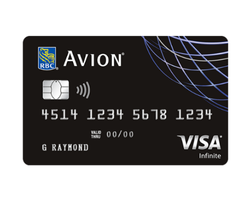
| Visa Infinite | $60,000 personal or $100,000 household | RBC Avion Visa Infinite, TD Aeroplan Visa Infinite, CIBC Aventura Visa Infinite |
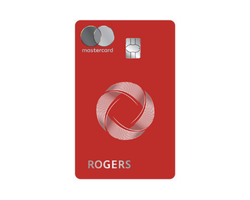
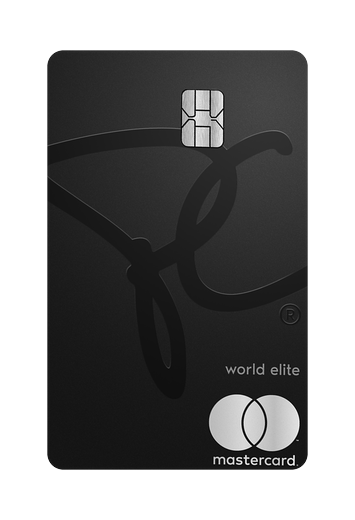
| World Elite Mastercard | $80,000 personal or $150,000 household | Rogers Red World Elite, PC World Elite, Triangle World Elite |
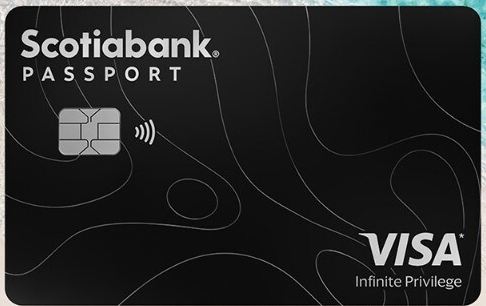
| Visa Infinite Privilege | $150,000 personal or $200,000 household, or assets under management | Scotiabank Passport Visa Infinite Privilege |
Some examples from issuer pages in October 2026:
- RBC’s Avion Visa Infinite page says a minimum personal income of $60,000 or household income of $100,000 is required, and adds that “this premium card can impose higher card acceptance costs on merchants.”
- TD lists $60,000 personal or $100,000 household income for the TD Aeroplan Visa Infinite.
- Rogers Bank lists $80,000 personal or $150,000 household for the Rogers Red World Elite Mastercard. PC Financial lists the same for the PC World Elite. Canadian Tire Bank lists the same for the Triangle World Elite Mastercard.
- Scotiabank’s Passport Visa Infinite Privilege requires a minimum personal income of $150,000, household income of $200,000, or $400,000 in assets under management.
Some mid-tier cards have their own thresholds. The CIBC Costco World Mastercard, for instance, requires $50,000 individual or $80,000 household income, per CIBC.
Why premium cards have income requirements
When you pay with a credit card, the merchant pays a fee, and a large part of it (the interchange fee) goes to the card issuer. Premium cards such as Visa Infinite and World Elite carry higher interchange rates than standard cards. That extra revenue helps pay for richer rewards, insurance and perks.
To limit those higher costs to merchants, the Code of Conduct for the Payment Card Industry in Canada, which the Financial Consumer Agency of Canada (FCAC) monitors, says premium cards “must only be issued to a well-defined class of cardholders based on individual spending, assets under management, and/or income thresholds.” Issuers must also include a prominent disclosure on applications that premium cards can impose higher acceptance costs on merchants. That’s the line you’ll see on RBC’s page.
The specific dollar figures come from the card networks’ and issuers’ own criteria for meeting that standard. That’s why nearly every Visa Infinite asks for $60,000 and nearly every World Elite asks for $80,000.
Personal vs. household income
Almost every premium card lets you qualify with either personal or household income.
- Personal income is your own gross (before-tax) annual income.
- Household income usually means the combined gross income of people in your household, such as you and your spouse or partner.
So a couple with incomes of $55,000 and $50,000 doesn’t meet the $60,000 personal threshold for Visa Infinite individually, but their $105,000 household income meets the $100,000 household threshold.
Read the application wording carefully. Report figures honestly, and be ready to show proof if asked.
Assets under management
Some top-tier cards, especially Visa Infinite Privilege cards, accept an alternative: a minimum amount of investments or deposits held with the bank. Scotiabank’s Passport Visa Infinite Privilege, for example, accepts $400,000 in assets under management instead of the income thresholds. This route helps retirees and others with significant savings but lower current income.
Spending as a qualifier
The Code of Conduct also allows “individual spending” as a basis. In practice, this mostly shows up when banks offer existing customers with high card spending an upgrade to a premium card. It’s not usually something you can claim on a new application.
How banks check your income
When you apply, you state your income. Banks may verify it by asking for documents such as:
- recent pay stubs or an employment letter,
- a Notice of Assessment from the Canada Revenue Agency,
- for self-employed applicants, tax returns or financial statements.
Not every application is checked in detail, but you agree that the information is accurate. Overstating income on a credit application can lead to the account being closed. It’s also a misrepresentation to a lender. Don’t do it.
Income is only one factor. Approval still depends on your credit history, existing debts and the bank’s own criteria. Our credit scores guide explains what lenders look at.
Cards without the usual tiers
Not every card with premium perks uses these tiers.
- American Express cards in Canada aren’t Visa or Mastercard products, so they don’t use the Visa Infinite or World Elite labels. Amex sets its own eligibility; the Cobalt Card’s page, for example, lists Canadian residency, a Canadian credit file and age of majority rather than an income minimum.
- “Platinum” Visa cards and standard Mastercards sit below the premium tiers. They usually have lower or no published income requirements, and often similar earn rates to their Infinite siblings with fewer benefits. TD’s Aeroplan Visa Infinite page, for example, points applicants who don’t meet the income requirement to the TD Aeroplan Visa Platinum instead.
- No-fee cards almost never have high income requirements, though a few no-fee World Elite cards exist, and they still need $80,000 personal or $150,000 household income.
What you gain with a premium card
Higher-tier cards typically include:
- More comprehensive travel insurance: longer medical coverage, trip cancellation, rental car coverage. See our travel insurance guide.
- Higher earn rates in bonus categories.
- Network perks, such as Visa Infinite concierge, dining and hotel programs, or Mastercard lounge memberships on some cards.
- Higher minimum credit limits.
They usually also have higher annual fees. Whether a premium card is worth it depends on your spending and how much you use the benefits; our guide to whether premium cards are worth it walks through the math.
If you don’t qualify yet
- Check the household threshold. You may qualify on combined household income.
- Choose the Platinum or non-premium version of the card you want. It may earn the same points with fewer insurance perks.
- Look at Amex cards, which don’t use the Visa Infinite or World Elite income tiers.
- Build your profile. A strong credit history makes approval easier once your income rises.
- Ask about an upgrade later. When your income passes the threshold, many banks let you switch to the premium version. Our product switching guide explains what to expect.
FAQ
What income do I need for a World Elite Mastercard in Canada? Typically $80,000 personal or $150,000 household gross income, per issuers such as Rogers Bank, PC Financial, and Canadian Tire Bank.
What income do I need for a Visa Infinite card? Typically $60,000 personal or $100,000 household gross income. RBC and TD list these figures for their Visa Infinite cards.
Is the income requirement before or after tax? Before tax (gross) is standard. Check the application wording.
Can a student or retiree get a premium card? If they meet the personal or household income, or an asset-based alternative where offered. Otherwise, a non-premium card is the usual route.
Why does a no-fee card have an $80,000 income requirement? Because it’s a World Elite card. The requirement is tied to the card’s premium network tier, which carries higher merchant fees, not to its annual fee.
What to do next
If you meet the requirements, compare options on the premium hub and travel hub. If you’re just below, the no annual fee hub includes strong cards without income minimums.