Business Credit Cards in Canada (2026): How They Work and What to Compare
Sole proprietors can get a business credit card in Canada too. Here's how business cards work, what the main issuers charge and earn, and how to pair one with your personal card.
By Andrew Updated How we review cards

A business credit card is a card issued for business spending, with features such as employee cards, spending controls and statements you can hand to your accountant. In Canada you don’t need to be incorporated to get one: BMO and TD, for example, both accept sole proprietors. Most small business cards still check your personal credit and may hold you personally responsible for the balance, so treat one like any other card you’re on the hook for. The rewards look a lot like personal cards: cash back, flexible points, or airline programs such as Aeroplan.
This guide covers how business cards work, what to compare, and what the main issuers list for their small business cards. Every fee and rate below comes from the issuer’s own page in October 2026; confirm on the issuer’s site before you apply.
How business credit cards work
- Who can apply. BMO says you just need to operate a business, which can be a corporation, a partnership or a sole proprietorship. TD says sole proprietors can qualify for all of its business cards.
- Your personal credit counts. TD says it checks personal credit for the applicant and any guarantors. Expect the same at most issuers, especially for a newer or smaller business.
- You’ll need documents. Issuers ask for things like a Master Business Licence or trade name registration, articles of incorporation, or a partnership agreement, depending on how the business is set up. BMO and CIBC publish their lists.
- Employee cards. Business cards let you add cards for employees, often with spending limits and one combined statement. BMO, for example, allows up to 2 owner cards and up to 22 supplementary cards on its business cards.
- Liability protection for employee misuse. Several business cards include coverage if an employee misuses a card, such as BMO’s Liability Waiver Program and RBC’s liability waiver insurance.
The main reason to get one is separation: keeping business purchases off your personal card makes bookkeeping and tax time simpler. Talk to your accountant about how expenses and rewards should be recorded for your business.
Small business cards from the main issuers
| Card | Network | Annual fee | Earns |
|---|---|---|---|
| BMO Blue Rewards Business Mastercard | Mastercard | $0 | Blue Points |
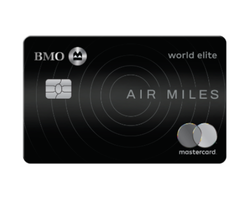
| BMO Blue Rewards World Elite Business Mastercard | Mastercard | $175 | Blue Points |
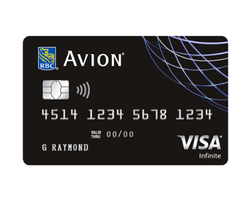
| RBC Avion Visa Business | Visa | $120 | Avion points |
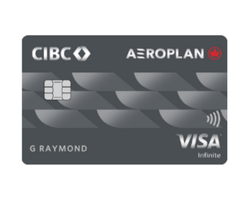
| CIBC Aeroplan Visa Business Card | Visa | $180 ($200 from January 12, 2027) | Aeroplan points |
| TD Business Travel Visa | Visa | $149 | TD Rewards points |
| TD Aeroplan Visa Business | Visa | $149 | Aeroplan points |
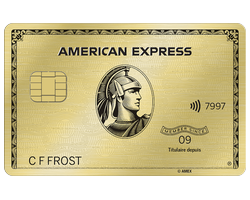
| American Express Business Gold Rewards Card | Amex (charge card) | See Amex’s page | Membership Rewards points |
BMO Blue Rewards Business Mastercard
BMO’s page lists a $0 annual fee, 20.99% on purchases and 23.99% on cash advances. It earns Blue Rewards points, the program that replaced AIR MILES (see our AIR MILES guide):
- 10 points per $1 at participating Blue Rewards partners and on travel booked through Blue Rewards Travel, on up to $15,000 in combined partner purchases per calendar year, according to BMO’s benefits guide.
- 2 points per $1 on gas and EV charging in Canada, on up to $1,000 per statement cycle.
- 1 point per $1 on everything else.
Blue Rewards lists 1,500 points as worth $10 when redeemed in store at partners or for eGift cards. BMO also lists 90-day purchase protection and up to one extra year of extended warranty.
BMO Blue Rewards World Elite Business Mastercard
BMO’s page lists a $175 annual fee (waived in the first year on the current offer), 20.99% on purchases and 23.99% on cash advances. To qualify you need $80,000 personal income, $150,000 household income, $250,000 in business revenue or $400,000 in assets under management. It’s the premium version of the card above.
RBC Avion Visa Business
RBC’s page lists a $120 annual fee, $50 per additional card, 19.99% on purchases and 22.99% on cash advances. It earns 1 Avion point per $1, and two features stand out if you also have a personal Avion card:
- You can pool Avion points between your business and personal Avion cards.
- If you hold both a business Avion card and a personal RBC Avion Visa Platinum or Avion Visa Infinite, RBC rebates the annual fee on one of them to $50 every year.
RBC lists trip cancellation and interruption, rental car insurance, 90-day purchase security and extended warranty.
CIBC Aeroplan Visa Business Card
CIBC’s page lists a $180 annual fee, rising to $200 on January 12, 2027, and $50 for each additional card (rising to $55). It requires $35,000 individual minimum income. CIBC lists:
- 2 points per $1 with Air Canada (including Air Canada Vacations) and at participating Hyatt hotels.
- 1.5 points per $1 on travel, local transportation, dining, and business services such as shipping, internet, cable and phone.
- 1 point per $1 on everything else.
- A free first checked bag on Air Canada for you, your authorized users and up to 8 companions, and up to 4 complimentary Maple Leaf Lounge guest passes a year.
- Purchase interest “as low as 12.99%” and cash interest “as low as 14.50%”; CIBC sets your actual rate.
If you fly Air Canada for work, compare it with personal Aeroplan cards such as the CIBC Aeroplan Visa Infinite, and read our Aeroplan for beginners guide.
TD business cards
TD’s business credit card page lists four business cards. Two carry a $149 annual fee: the TD Business Travel Visa (19.99% on purchases, 22.99% on cash advances), which earns TD Rewards points, and the TD Aeroplan Visa Business (22.99% on cash advances), which earns Aeroplan points. TD also issues cash back and low-rate business cards; check TD’s page for those.
American Express Business Gold Rewards Card
American Express’s Business Gold Rewards benefits page describes a charge card: you pay most charges in full each month, with a Flexible Payment Option for balances you carry (listed at 21.99%). It lists:
- 1 Membership Rewards point per $1, plus 10,000 bonus points for each calendar quarter in which you spend $20,000, up to 40,000 bonus points a year.
- No pre-set spending limit.
- Supplementary Business Gold cards at $50 each per year.
- Employee card misuse protection up to $100,000, mobile device insurance up to $1,000, and travel coverage including rental car theft and damage.
Amex lists statement credits at 1,000 points = $10, and points can also go toward travel, gift cards and merchandise. Remember that Amex isn’t accepted everywhere in Canada; see our Amex acceptance guide. For the annual fee, check Amex’s current card page.
What to compare
- How you’ll redeem. Cash back or statement credits are simplest. Points programs such as Aeroplan or Avion can be worth more if you’ll use them for travel. Our points value guide explains typical values.
- Annual fee vs your spending. A $0 card with a modest earn rate can beat a $150 card if your business spends little. Estimate a year of spending by category and do the math.
- Employee cards. Check how many you can add, the fee per card, and whether you can set limits.
- Interest rate. If the business might carry a balance between invoices, the purchase rate matters more than the rewards. If you’ll borrow regularly, compare the card’s rate with a business line of credit.
- Acceptance. If your suppliers or Costco runs are a big part of spending, a Mastercard may matter. See our best Mastercard picks.
- Your personal cards. Some issuers reward holding both, like RBC’s Avion fee discount and point pooling.
Using a personal card for business instead
Many sole proprietors start with a personal card. It works, but you lose the clean separation and the employee features. If you go that route, use one card only for business so your statements double as an expense record. If you’d rather keep earning on a personal card you already know, compare premium personal cards on the premium hub.
FAQ
Can a sole proprietor get a business credit card in Canada? Yes. BMO says sole proprietorships can apply, and TD says sole proprietors can qualify for all of its business cards.
Does a business credit card affect my personal credit? Issuers usually check your personal credit when you apply. TD says it checks personal credit for the applicant and any guarantors. Read the cardholder agreement to see whether you’re personally liable for the balance.
Are there business credit cards with no annual fee? Yes. The BMO Blue Rewards Business Mastercard lists a $0 annual fee.
Which business cards earn Aeroplan points? The CIBC Aeroplan Visa Business Card and the TD Aeroplan Visa Business both earn Aeroplan points.
Can I combine business and personal rewards? Some programs allow it. RBC lets business owners pool Avion points between business and personal Avion cards.
What to do next
Decide first how you want to redeem, then shortlist two or three cards from the issuers above and read their current pages, since business welcome offers change often. If a personal card might do the job, the travel hub and the credit card offers page show what’s available this month.