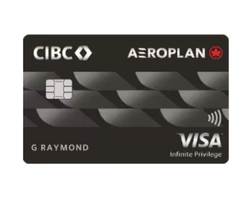
Who this card is for
A good fit if you…
- Frequent Air Canada flyers who meet the personal or household income thresholds in eligibility and will buy tickets and Air Canada Vacations on this Visa for the 2x cobrand rate.
- Households that will also use 1.5x on grocery, gas, travel, and dining — the mix that makes Privilege more than an airline sticker.
- CIBC customers who would rather keep banking, the card, and Aeroplan in one relationship than open a TD or Amex premium cobrand.
- People replacing regular CIBC Aeroplan Infinite because they have outgrown 1.5x Air Canada and 1x on everything else, and will pay Privilege money for 1.25x as the floor.
Skip it if you…
- Anyone who does not already spend like a premium-cardholder. A high fee with 1.25x on most retail is a poor grocery card with an Air Canada logo.
- Households that would be happy with 1.5x grocery/gas/Air Canada on a Visa Infinite. That is regular CIBC Aeroplan Visa Infinite at a much lower fee.
- WestJet-only flyers, cash-back shoppers, or people who need to carry a balance. Privilege is not a cheap line of credit.
- Applicants moving from another CIBC card, and anyone who already received a welcome, additional, or anniversary bonus on a new Aeroplan credit card in this same card category from CIBC or another issuer. Transfers, product changes, and additional cardholders are excluded from the offer.
Pros and cons
Pros
- 2x Aeroplan on eligible Air Canada and Air Canada Vacations spend is the cobrand rate that matches TD’s Privilege card and beats regular CIBC Infinite’s 1.5x on tickets.
- 1.5x on grocery, gas, EV charging, travel, and dining is a wider everyday stack than the non-Privilege CIBC cobrand, which stops the 1.5x list at grocery, gas, EV, and Air Canada.
- 1.25x on everything else is a better floor than 1x, which matters if this is your premium everyday Visa.
- The current welcome path pays on a two-statement spend, again after four statements, and again as an anniversary bonus after a high first-year spend — new applicants who stay a year can stack all three.
- 2 points per $1 at participating Hyatt hotels and resorts sits beside the 2x Air Canada rate, and primary cardholders earn 1,000 Status Qualifying Credits per $5,000 in eligible net purchases, up to 25,000 SQC.
Cons
- The annual fee is premium-card money, and additional cards currently carry their own high fee for up to nine extras. A family of authorized users is a second membership.
- CIBC’s larger “up to $3,200” figure is not a second points valuation. The 100,000 Aeroplan points are up to $2,000 in travel value; the $3,200 also counts a free first checked bag ($140), Maple Leaf Lounge access ($590), Visa Airport Companion visits (up to $385), and the NEXUS application-fee rebate ($160).
- Insurance on this card names out-of-province emergency medical, trip cancellation and interruption, flight and baggage delay, hotel burglary, car rental damage, purchase security and extended protection, mobile device, and common carrier accident coverage. CIBC does not print the dollar limits on the product page, so they are not quoted here.
- The offer is for newly approved accounts beginning July 16, 2026. Transfers and product changes from other CIBC cards are excluded, and additional cardholders are not eligible.
- Dining-heavy spenders who wanted 3x Air Canada and 2x restaurants on American Express should compare Reserve, not assume CIBC’s 1.5x dining is the same product.
Fees and value: is the annual fee worth it?
First-year snapshot (estimate)
- Annual fee
- $599
- Estimated welcome bonus value
- $3,200
- Bonus minus fee (estimate)
- $2,601
This is a simple comparison of the estimated welcome-bonus value against the annual fee. It ignores rewards on spending, credits you have to remember to use, and interest if you carry a balance. Offers change — verify with the issuer.
Use the fee table. The headline annual fee and the detail line currently match, which is simpler than some premium cobrands.
Compare that fee with the estimated welcome-bonus value. The points schedule is up to 100,000 Aeroplan points, which CIBC prices at up to $2,000 in travel value: 10,000 points after $1,000 in the first 2 statement periods, 40,000 after $5,000 in the first 4, and 50,000 after $25,000 in net eligible purchases in the first 12.
CIBC’s separate “up to $3,200” adds a free first checked bag ($140), Maple Leaf Lounge access ($590), Visa Airport Companion visits (up to $385), and the NEXUS fee rebate ($160). Year one only matches the brochure if you hit all three spend gates.
Year two is the fee versus 2x Air Canada, 2x at participating Hyatt hotels, and 1.5x grocery, dining, and travel. Foreign-currency purchases carry a 2.5% conversion fee.
No offer end date is published. Additional cards are extra.
Pay in full.
Rewards and earn rates explained
Rewards program: Aeroplan Points
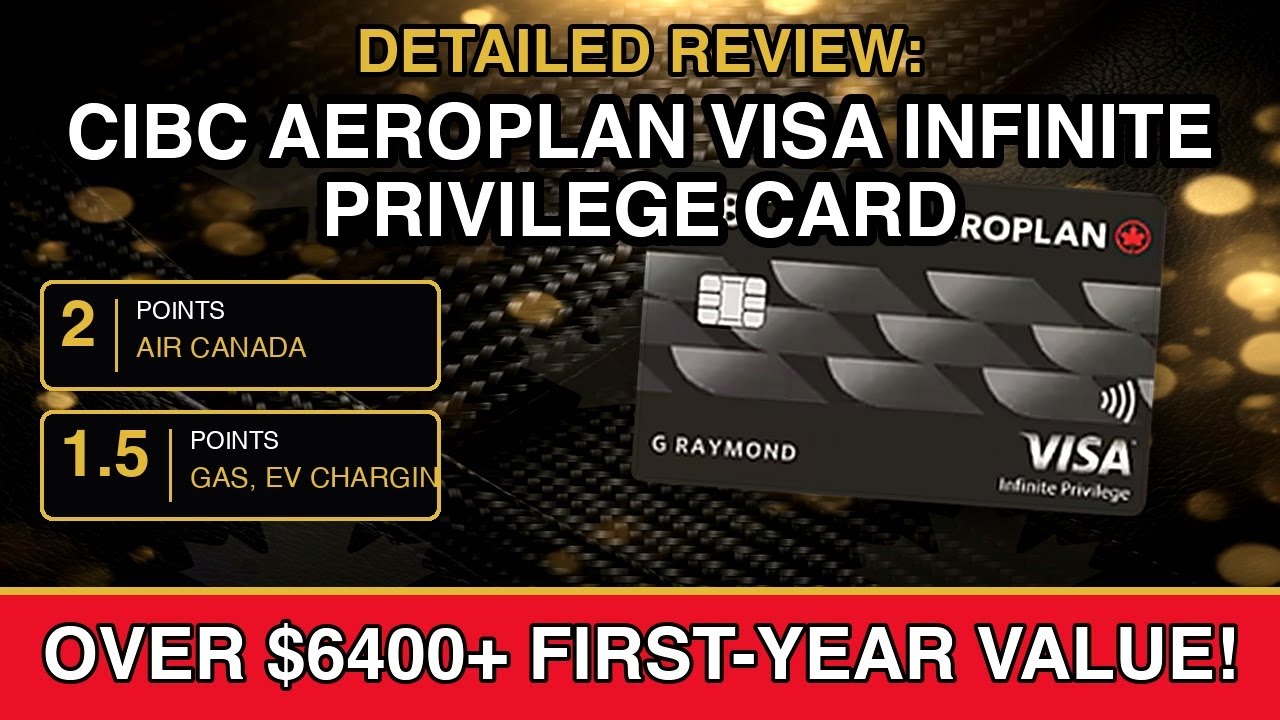
This card earns Aeroplan points. Eligible gas, EV charging, groceries, travel, and dining earn 1.5 points per dollar.
Purchases made directly with Air Canada, including Air Canada Vacations, earn 2 points per dollar, and so do purchases at participating Hyatt hotels and resorts. All other purchases earn 1.25 points per dollar.
That is a richer mix than regular CIBC Aeroplan Infinite (1.5x grocery, gas, and Air Canada, 1x else). Grocery and “travel” coding is still where cobrands get picky.
Primary cardholders also earn 1,000 Status Qualifying Credits per $5,000 in eligible net purchases, up to 25,000 SQC. Other benefits in the card’s features: select Maple Leaf Lounges and Air Canada Cafés in North America (one guest before December 31, 2026), 6 complimentary Visa Airport Companion visits per cardholder per year, a free first checked bag and priority services for you, authorized users, and up to 8 companions on Air Canada flights, an Annual Worldwide Companion Pass after $25,000 in card spend, one NEXUS application-fee rebate every 4 years, an Avis President’s Club upgrade, and World of Hyatt Discoverist status plus 5 tier-qualifying night credits when accounts are linked.
Flight rewards are where the program earns its keep. If you buy the Air Canada ticket on this Visa, you get cobrand earn and a network the airline checkout will take without an Amex surprise.
Welcome bonus: how to unlock it
Apply and earn up to $3,200 in value, which includes up to 100,000 Aeroplan points!
For newly approved accounts beginning July 16, 2026, the offer is up to 100,000 Aeroplan points (up to $2,000 in travel value): 10,000 points when you spend $1,000 or more in the first 2 monthly statement periods, 40,000 when you spend $5,000 or more in the first 4, and 50,000 as an anniversary bonus when at least $25,000 in net eligible purchases posts in the first 12. CIBC’s up-to-$3,200 figure adds a free first checked bag ($140), Maple Leaf Lounge access ($590), Visa Airport Companion visits (up to $385), and the NEXUS application-fee rebate ($160).
No end date is published, and the offer may be withdrawn or changed. Transfers and product changes from other CIBC cards are excluded, additional cardholders are not eligible, and Aeroplan’s own terms can block you if you already received a welcome, additional, or anniversary bonus on a new Aeroplan card in this same category from CIBC or any other issuer.
Hit the spend with planned travel and grocery, not manufactured transactions.
Welcome bonus eligibility: Offer applies to newly approved card accounts only (approvals beginning July 16, 2026); transfers and product changes from other CIBC credit cards are excluded and additional cardholders are not eligible. Under the Aeroplan program terms you may not be eligible if you previously received a welcome, additional or anniversary bonus on a new Aeroplan credit card of the same card category type from CIBC or any other issuer.
FAQ
Is the CIBC Aeroplan Visa Infinite Privilege Card worth it in 2026?
It is worth it for high-income Air Canada households that will use 2x tickets, 1.5x grocery and dining, and can hit the staged welcome. It is not worth it if regular Infinite’s mix is enough, you fly WestJet, or you will carry a balance.
CIBC Aeroplan Infinite Privilege vs regular Infinite?
Regular Infinite currently lists 1.5x on grocery, gas, EV, and Air Canada, with 1x elsewhere, at a mid-fee Infinite income bar. Privilege currently lists 2x Air Canada, 2x at participating Hyatt hotels, 1.5x grocery, gas, travel, and dining, and 1.25x else, at a much higher fee and income bar. Choose Privilege only if that spending band is already your life.
CIBC vs TD Aeroplan Visa Infinite Privilege?
On earn mix they are cousins: both pay 2x on Air Canada and 1.5x on a grocery, gas, travel, and dining stack, at a similar premium fee. CIBC also pays 2x at participating Hyatt hotels.
Choose TD if you bank at TD or want TD’s welcome structure; choose CIBC if that is already your bank. Read both live offers — staged bonuses and fee-detail quirks are not identical.
CIBC Aeroplan Privilege vs American Express Aeroplan Reserve?
Reserve currently lists 3x Air Canada and 2x dining on American Express, with weaker grocery coverage. CIBC wins on Visa acceptance and grocery/gas bonus categories. If you can hold only one premium cobrand, pick the network you use at the supermarket.
Does this card charge foreign-exchange fees?
Foreign-currency purchases on this card carry a 2.5% conversion fee. It is not a no-FX card. For trip spend, compare Scotiabank Passport Visa Infinite.
Compare related cards and guides
More Canadian credit card lists that match this product, plus a few cards people usually compare it with.
- CIBC Aeroplan Visa Infinite Card review · CIBC · $139 annual fee
- TD Aeroplan Visa Infinite Privilege Credit Card review · TD · $599 annual fee
- American Express Aeroplan Reserve Card review · American Express · $599 annual fee